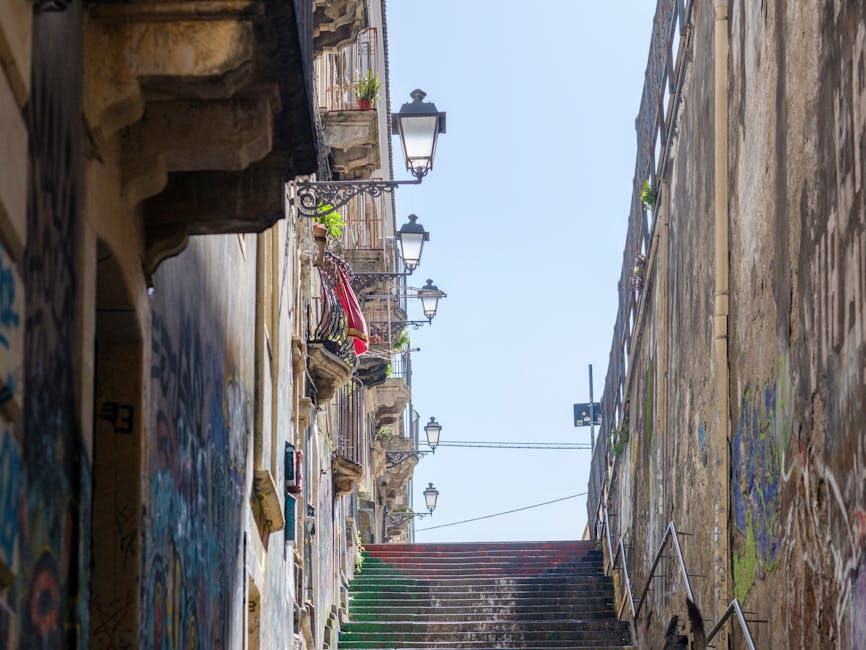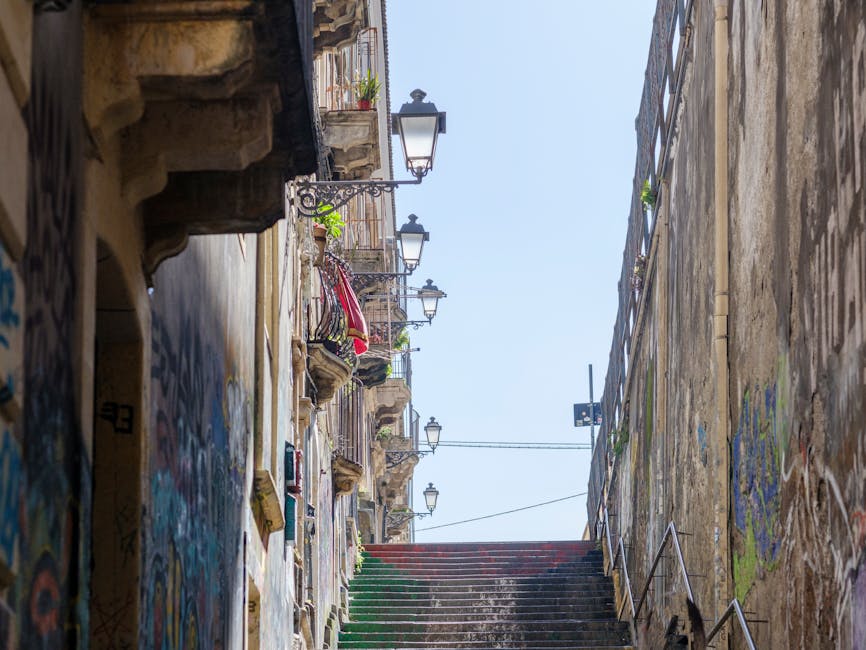






Introduction: Catania, forbidden stairs and urban legends — an immersive guide
Catania reads like a novel carved from stone and lava: a city where Mount Etna breathes its presence into every alley, where soot-darkened façades tell stories of shadow and light. Among the local tales that thread through this Sicilian city, the story of the “forbidden stairs” holds a special place — a legend that mixes with other urban myths, neighborhood superstitions and anecdotes, creating an invisible map of emotionally charged spots. This general guide invites you to explore Catania step by step — through its stairways, squares and places with very real names — to see how official history sometimes blends with the collective imagination.
The goal of this piece is twofold: first, to introduce the stairs and other “forbidden” spots locals talk about, giving you concrete waypoints — full addresses, opening hours, prices, immersive descriptions — so you can orient yourself and decide whether you want to venture. Second, to place these places in their historical and social context: why does a flight of steps become “forbidden”? Is it fear of the supernatural, municipal rules, structural danger, or simply word-of-mouth caution passed down through generations? In Catania, the answer often depends on the spot and on how vividly its residents like to tell the story.
You’ll find practical information here — exact addresses like Piazza Duomo, 95131 Catania CT, or Castello Ursino, Piazza Federico di Svevia 1, 95121 Catania CT — along with recommendations on the best times to visit, current prices in euros and local customs. You’ll encounter “forbidden” stairs because they border fragile monuments, or because a rumor has cast over them an unsettling aura. You’ll also come across places of worship, theaters, urban parks and cafés where people trade these tales over a caffè. This guide favors a respectful approach: historical sites must be protected and local beliefs respected, even when they seem superstitious.
I suggest a walk organized into themed sections — each well documented — so your steps through Catania are both safe and full of discoveries. You’ll find practical tips (opening hours, entry prices, access), immersive descriptions (the texture of the stones, play of light, neighborhood sounds), and cultural cues (who tells the legend and why). To make the narrative more visual, I’ve placed image markers in strategic spots: these visual suggestions will help you picture the city before you go.
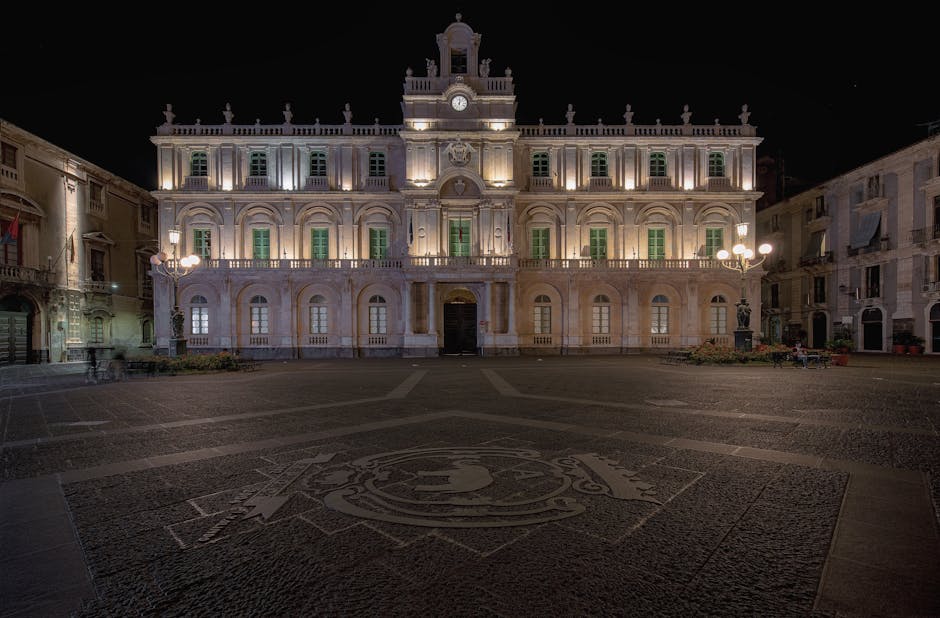
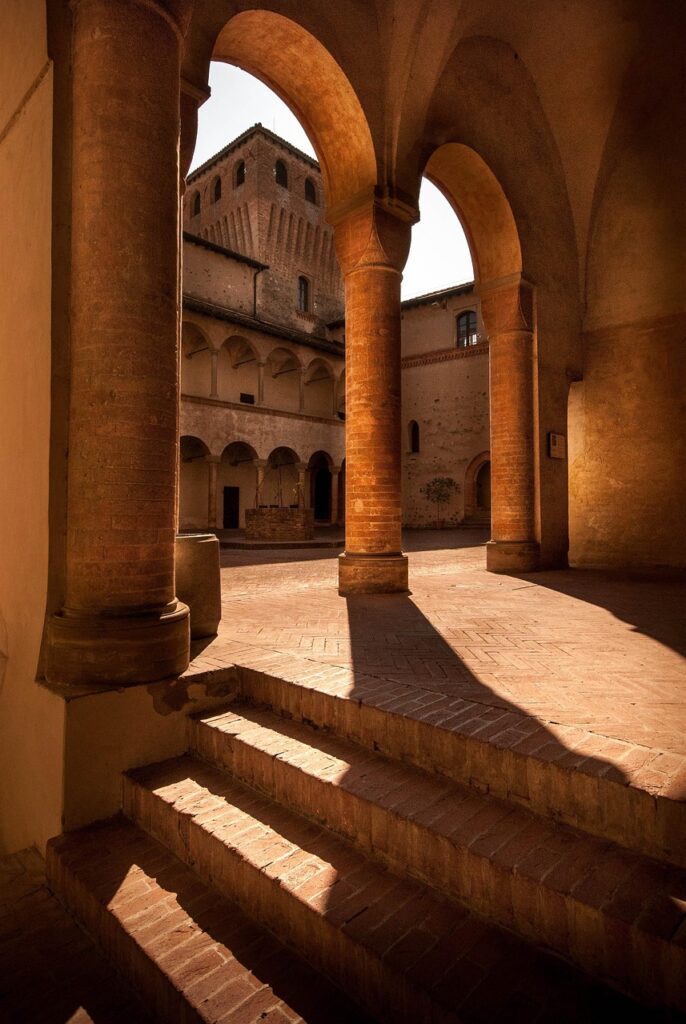
1) The historic centre’s “forbidden stairs”: Via dei Crociferi and surroundings
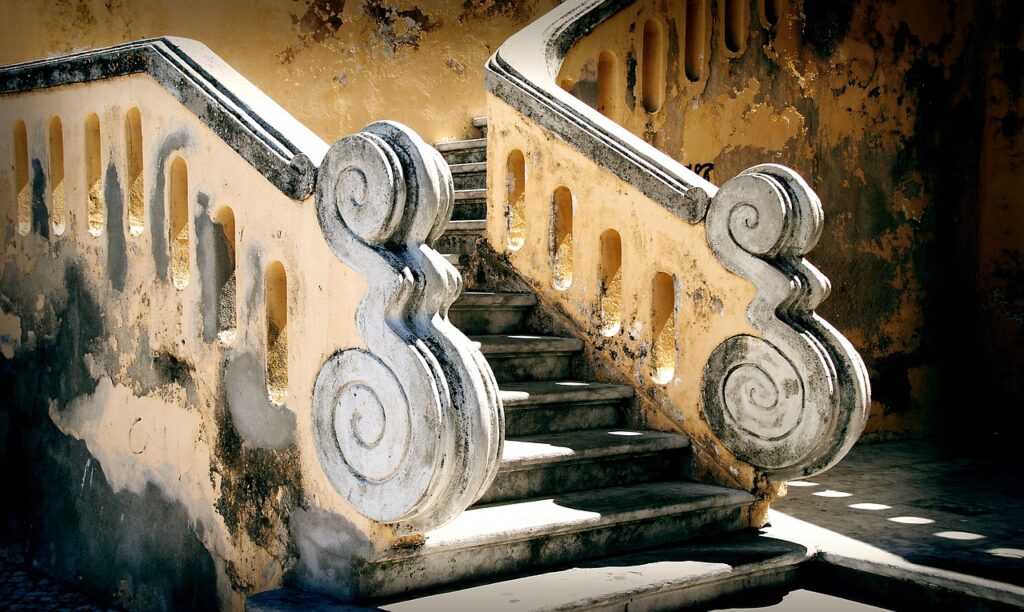
Via dei Crociferi is often at the heart of local legends. This baroque thoroughfare, part of Catania’s urban heritage, hosts convents, churches and long flights of steps that rise and fall around the religious complexes. General address: Via dei Crociferi, 95131 Catania CT. Here, the idea of a “forbidden stair” sits at the crossroads of myth and heritage protection: some narrow handrails and flagstones are physically fragile and closed to tourist traffic for conservation reasons.
Immersive description: picture ochre walls, old wooden doors with wrought-iron details, stone steps polished by centuries of footsteps, and arcades that filter the light. At dusk the street takes on a deep orange hue; shadows seem to stretch across the façades. Locals say that at certain hours — especially at night — invisible footsteps climb the stairs, as if monks were returning to perform their rituals. Young people like to add drama: “don’t climb the last steps after midnight, or else…”. This informal prohibition functions mostly as a local rite of passage.
Practical tips:
- Getting there: Via dei Crociferi is about 350 m from Piazza Duomo (Piazza Duomo, 95131 Catania CT); walking from Via Etnea is recommended.
- Opening hours: freely accessible during the day; some private sections (along monastery sides) are closed between 18:00 and 08:00. Respect signage and never force a closed gate.
- Cost: the street itself is free; guided tours of convents and churches are paid (e.g., Monastero dei Benedettini — inquire on site for tours and fees, typically between €3 and €8).
- Safety: wear slip-resistant shoes — polished and uneven stones can be slippery, especially after rain.
Legend and interpretation: here the “forbidden” label is mainly social. Mothers warn children that the stairs are “cursed” to keep them away from monastery service areas; local guides use these stories to capture tourists’ attention. In reality, some steps are simply fragile and dangerous — the best advice is to heed official warnings and prefer authorized guided visits that explain the history of the places.
2) The amphitheatre steps and the whisper of Castello Ursino
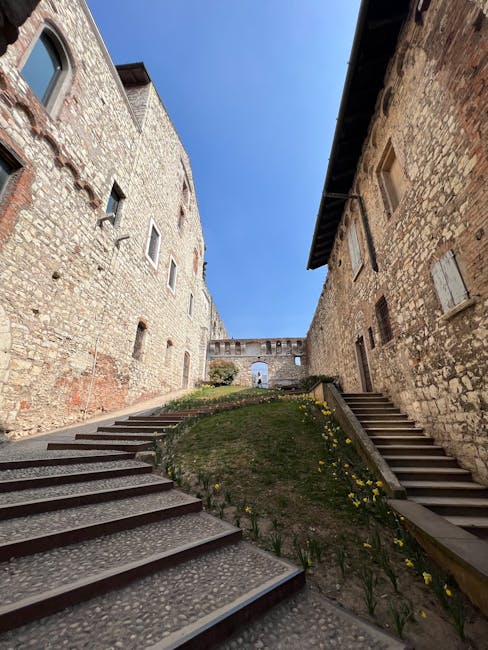
Castello Ursino — located at Piazza Federico di Svevia, 1, 95121 Catania CT — is one of the city’s most prominent medieval monuments. Built in the 13th century, it now houses the Museo Civico. Exact address and practical info: Castello Ursino, Piazza Federico di Svevia 1, 95121 Catania (museum), museum phone: +39 095 396 829 (check for reservations). Typical hours: 09:00–19:00 (closed Monday; hours may change by season). Indicative price: museum ticket around €6.00 for adults, reductions available for students/seniors (€2.00–€4.00 with ID).
Immersive description: approaching the castle from the sea, you feel the weight of stone and history. The fortress rises on a platform whose wide, low steps saw merchants, soldiers and onlookers pass by. Around the castle small flights of steps lead to viewpoints overlooking the sea and urban arteries. Here, the legend speaks of a “forbidden” stair under the southern bastion: sealed after a 17th-century flood, they say anyone who descends too far will awaken the anger of the sea and ancient guardians.
Practical tips:
- Museum visit: aim for the morning to avoid the heat (opens at 09:00). Standard tickets hover around €6.00; check municipal free-entry days.
- Access: main entrance at Piazza Federico di Svevia 1; outer steps are freely accessible but some areas are closed for conservation.
- Recommendation: avoid unauthorized exploration under the castle — zones may be unstable. Use marked routes to reach viewpoints.
Legendary aspect and local lore: the castle attracts tales of buried treasure and tunnels leading beneath the city. It’s common to hear fishermen claim they’ve seen strange lights emerging from the basements during stormy nights. These stories are largely variations of Mediterranean folklore, amplified by the mysterious look of sealed staircases. For visitors, the rule is simple: respect barriers and museum guides — the castle is far richer and safer to explore via official routes.
3) Stairs to the sea and fishermen’s lore: Lungomare and the scalinata del Porto
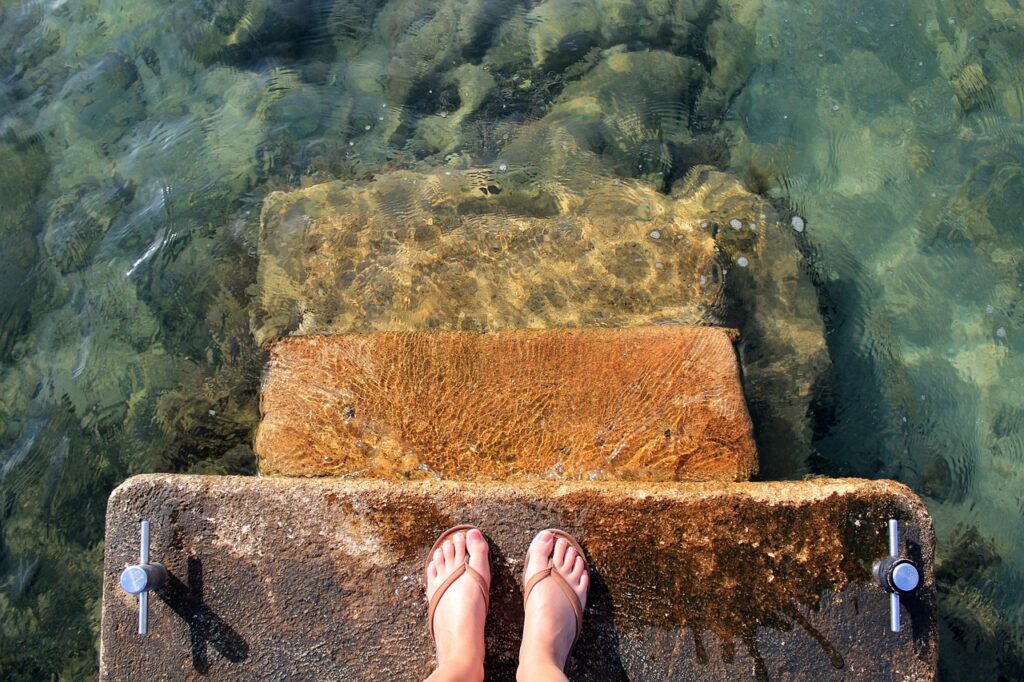
Catania’s seafront, the Lungomare, is dotted with steps that lead down to small slips and fishing landings. One frequently mentioned spot among elders is the “scalinata del Porto” — not a single address but a series of access points along Catania’s harbor. The main port is Porto di Catania, Lungomare Bellini, 95121 Catania CT — a busy, monitored area. The public steps down to the water may look harmless by day; at night, locals say some are “forbidden” by tradition because the sea would claim those who venture without an offering.
Immersive description: breathe in the salty air, hear boats lapping, watch the water mirror the city lights. The steps to the sea are often damp, strewn with shells, and flanked by walls covered in graffiti and algae. The texture under your fingers is rough: concrete, volcanic stone, traces of spray. Fishermen say tides steal the luck of those who descend alone on certain nights — advice that, more practically, aims to dissuade people from going onto slippery, dangerous rocks.
Practical tips:
- Access to the Lungomare: main entries from Via Cardinale Dusmet and Lungomare Bellini; area is monitored but avoid unlit stairways at night.
- Safety: don’t approach the edges without a life jacket; real “no access” signs (« Divieto di accesso ») sometimes mark unstable sections.
- Other services: organized walks and boat trips depart from Porto di Catania; prices vary (e.g., mini-cruises €15–€30 depending on duration).
Sailors’ legends and rituals: tradition has it that fishermen leave a small offering (a coin, a sprig, a bar of soap) before heading out to placate the “Mamma del Mare.” These practices, more spiritual than hazardous, create the idea of a symbolic prohibition: ignoring the ritual invites risk. Visitors should observe these gestures respectfully and stick to the safe, municipal-marked zones.
4) Other urban legends: churches, theaters and “haunted” staircases
Catania is rich in storytelling places: the Cattedrale di Sant’Agata (Piazza Duomo, 95131 Catania CT) is naturally linked to tales about the patron saint and to secret spots sometimes described as “closed” to the public. One persistent legend speaks of a hidden landing behind a heavy door where forgotten ex-votos are found. Practical info for the cathedral: Piazza Duomo, 95131 Catania CT; usual opening hours 07:30–12:30 and 16:00–19:00 (may vary with services); free entry but donations and guided tours possible (special tours around €3.00–€5.00).
Theaters like Teatro Massimo Bellini (Via Giuseppe Verdi — common address: Via Giuseppe Verdi, 13/15, 95129 Catania CT — check locally; the theatre often offers guided tours) have their own tales: a box that remains empty yet echoes with the applause of a past performance, or a staircase “forbidden” to patrons without permission. Performance venues happily cultivate these stories, halfway between cultural marketing and folklore.
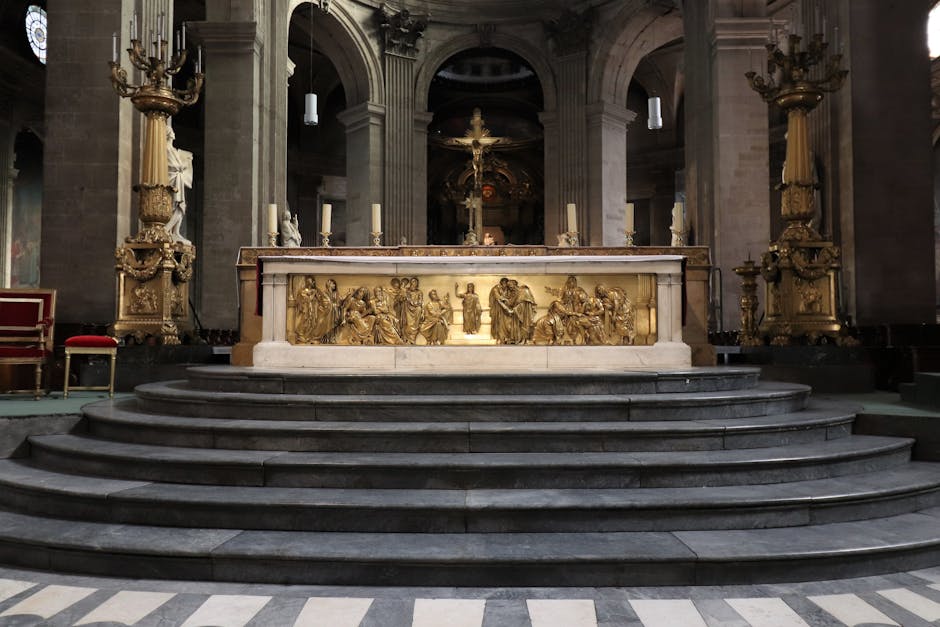
Immersive descriptions: in churches you’ll find muffled echoes, lingering incense and polished marble; in theaters, the velvet of seats and the pull of backstage stairways create fertile ground for ghost stories. Interior staircases, often narrow and secondary, are those that inspire the most tales: they lead to servant levels, attics and boxes — natural hotspots for legend.
Practical advice and respectful behavior:
- Respect: in churches, observe mass times and restricted zones (do not cross barriers marked « Divieto di Accesso »).
- Guided tours: favor official tours (theaters and churches often run guided visits priced between €3.00 and €10.00 depending on the offering) — they provide safe access to areas usually closed to the public.
- Photography: photos may be restricted or forbidden in certain places; follow posted rules.
Origins of the rumors: often a safety clause (barring access to a gallery or stair) becomes a mystical story. Urban societies like to dress prohibitions in mystery; in Catania, proximity to Etna feeds the fantastic. The main thing for visitors is to distinguish myth from administrative reality: follow signs, ask at tourist offices (Ufficio Informazioni e Accoglienza Turistica, Piazza Duomo) and use organized tours to safely explore the city’s secrets.
Additional local tips and best practices
– Always check with Catania’s Tourist Office (Ufficio Informazioni, Piazza Duomo) for up-to-date prices and any temporary restrictions.
– Prefer morning visits to explore stairways and alleys: the light is best and the city is cooler.
– Avoid unmarked areas after dark: most “forbiddens” were first imposed for safety.
– Respect prohibitions to help preserve heritage: many steps are made of fragile volcanic stone.
– Talk to locals: oral stories are a valuable source of information, but keep a critical mind — legends evolve.
Conclusion: understanding the forbidden between legend and preservation
The “forbidden stairs” and other urban legends of Catania reflect a living relationship with heritage, risk and collective memory. Often what’s presented as forbidden stems from a mix of factors: administrative reasons (conservation), material risks (collapsed steps, landslides), and popular folklore that turns practical warnings into dramatic stories. The best attitude for a visitor is to balance curiosity with respect.
Practically speaking, if you want to explore these places: start with official routes around Piazza Duomo, Via Etnea and Castello Ursino; book a guided tour to understand the history and gain safe access to closed areas; and above all, heed signs and warnings. The legends will make your visit more colorful, but guides, museums and municipal offices will give you the reliable, safe keys. The prices noted here (for example: Castello Ursino ticket ~ €6.00, guided tours €3.00–€10.00) are useful benchmarks, but remember to verify times and rates on site or on official websites, as they can change with the season.
In the end, Catania offers you a journey both tangible and imaginative: stairs may be forbidden in the strict sense, or only “forbidden” by the elders’ tales. By respecting heritage and local rules you can enjoy the stories without risking damage to what produced them. Whether you’re drawn to Etna-blackened stones, theater corridors or harbor slips, let curiosity lead — and let the no-access signs be your occasional storyteller.