





Introduction: An intimate dive into Catania’s secret alleys
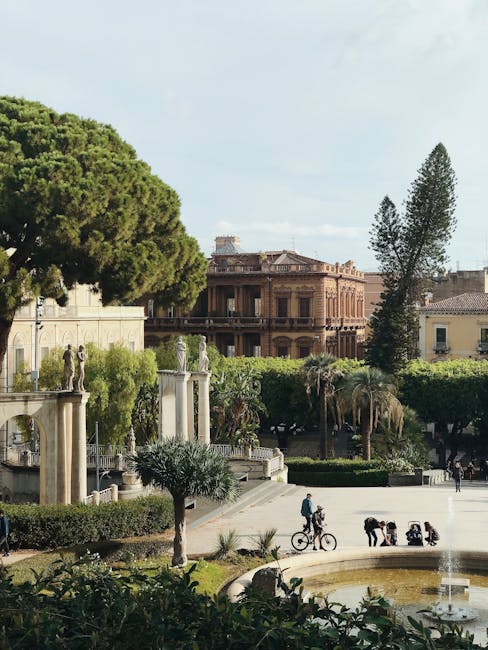
Nestled at the foot of Mount Etna, Catania is often seen through its postcard moments: Piazza del Duomo with the Fontana dell’Elefante, Via Etnea, and the volcano’s towering silhouette. Yet beyond these icons lies a city of mazes, narrow passageways and tiny squares where history is written in stone, local legends linger, and everyday life keeps an older rhythm. These secret alleys, usually skipped by standard tourist routes, deliver a full sensory experience: the smell of cooking, distant singing, walls blackened by centuries of eruptions, forgotten mosaics, and stairways that open onto unexpected panoramas.
This article offers a practical, in-depth exploration of Catania’s forgotten treasures and nighttime mysteries. Rather than listing generic attractions, I’ll lead you to specific spots: Via Crociferi with its hidden baroque façades, the Monastero dei Benedettini with cloisters and Etna views, the fragments of the Teatro Romano and the Roman Amphitheatre at the city’s heart, and the private gardens and courtyards where the city lets you in. You’ll find immersive descriptions plus exact addresses, opening hours, current prices in euros and practical tips — how to get there, the best time of day for light, and where to stop for an authentically Sicilian coffee.
Catania’s alleys also have a fascinating nocturnal side. At dusk, small squares come alive in ways known only to those who know the city: impromptu bands, night vigils at churches, storytellers recalling Saint Agatha, and shadows cast by old streetlamps on hidden portals. We’ll cover the mysteries and safety precautions for night walks, safe routes, and experiences you shouldn’t miss — like having a granita late on the steps of a baroque church or tracing ancient legends carved into the stones.
Whether you travel solo seeking inspiration, are a photographer hunting unique frames, or simply curious about Catania’s hidden side, this piece is your guide, sensory notebook and toolkit. Lace up your most comfortable shoes, bring your curiosity, and let yourself be led step by step through a network of alleys that tell the city’s story differently.
Alleys and micro-neighborhoods to explore: Via Crociferi, Vico Santa Filomena and forgotten passages
The first step to understanding Catania’s secret side starts in its narrow streets lined with baroque façades and stone portals. Via Crociferi is short but essential: about 300 metres long, it connects Piazza San Francesco d’Assisi to Via Etnea and features churches like the Chiesa di San Benedetto (Piazza San Benedetto, 95124 Catania CT). Exact address: Via Crociferi, 95129 Catania CT. Hours: churches are usually open 8:00–12:00 and 16:00–19:00; check specific times during services. Entry: free to view the exterior; guided visits of cloisters sometimes cost around €4.00–€6.00.
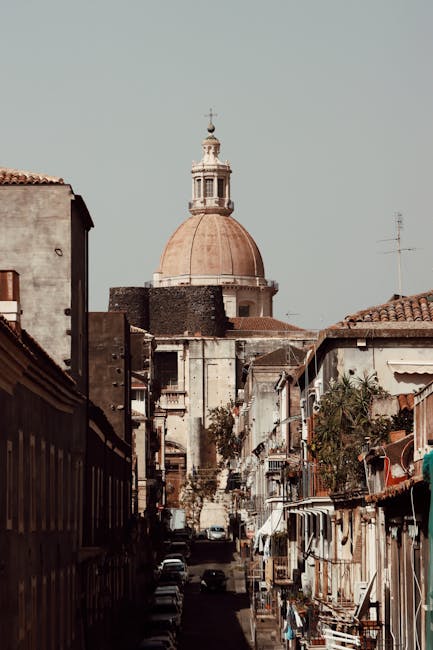
Turning off Via Crociferi into vici (narrow lanes) like Vico Santa Filomena or Vico del Bottone, you’ll find artisan workshops, inner courtyards where laundry still hangs, and Latin inscriptions carved into doorjambs. These spots are particularly photogenic early in the morning when light grazes the walls and reveals the textures of lava rock and limestone. Useful address: Vico Santa Filomena, 95131 Catania CT (approximate coordinates: intersection Via Crociferi / Via Etnea).
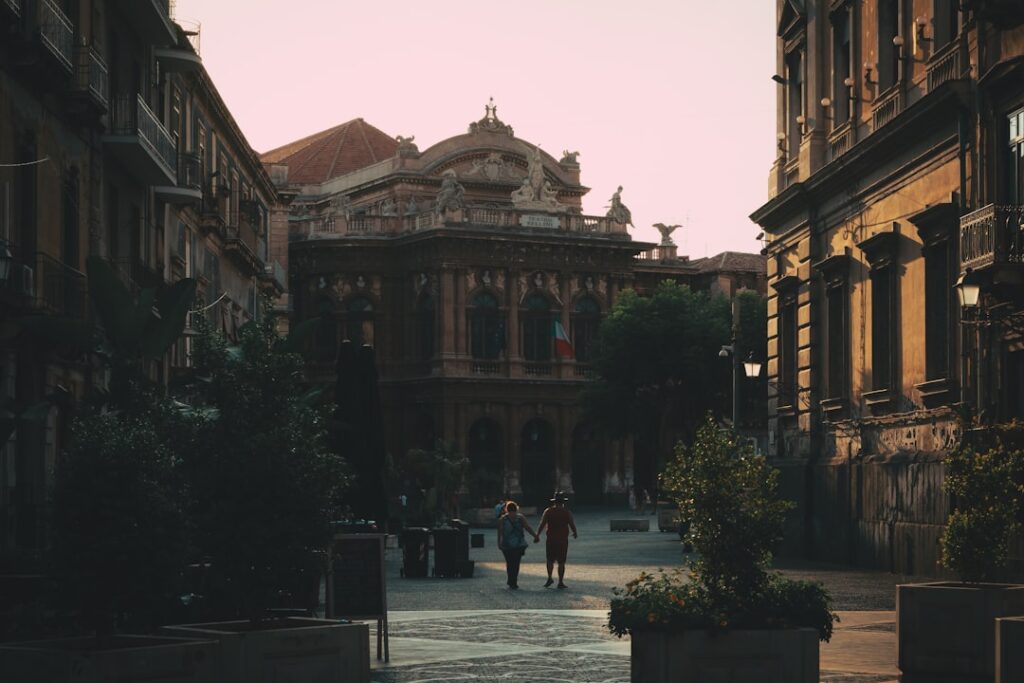
Via Santa Barbara, parallel to Via Etnea, hides old shops and cafés frequented by locals. It’s in these micro-neighborhoods that you sense the real Catanese identity: conversations in dialect, cured meats hanging in windows, and small trattorie serving the local stew. For an immersive experience, start your walk at Piazza Bellini (Piazzale Vincenzo Bellini, 95131 Catania CT) and drift into the alleys behind the Teatro Massimo Bellini.
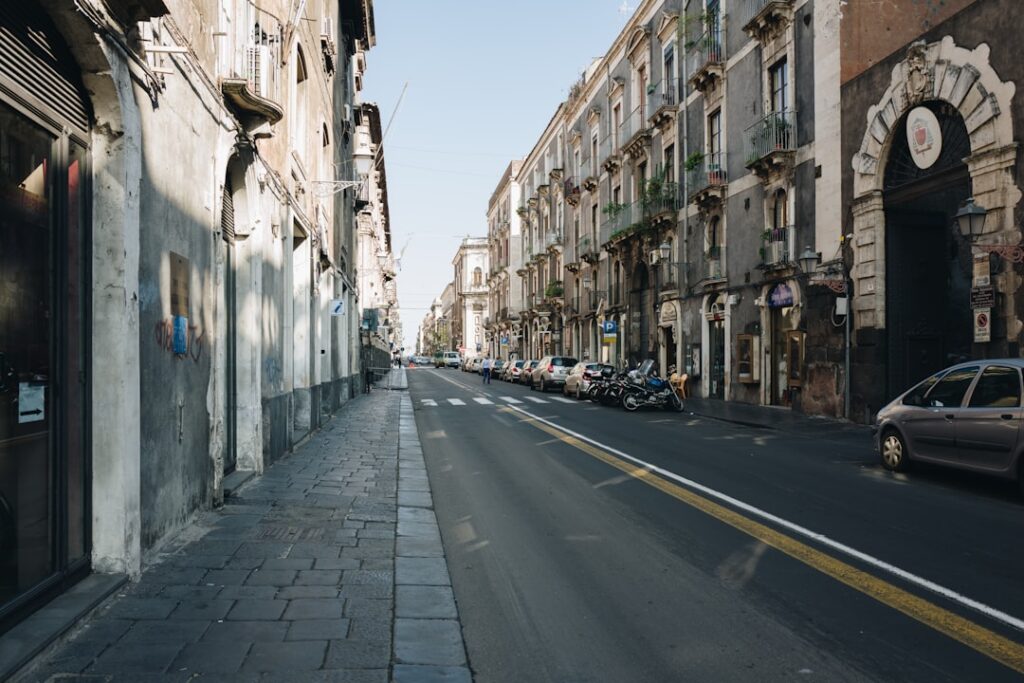
Practical tip: to spot secret passages, follow the sounds — a distant horn, voices, music — and look for grates and small numbered portals. Respect people’s privacy: many courtyards are private; if a door is open, greet and ask permission before photographing. The best times to explore these lanes are early morning (6:30–9:30) and late afternoon (17:00–19:30), when the light is soft and temperatures are pleasant.
Hidden monuments and forgotten treasures: a precise route with addresses, hours and prices
Among Catania’s treasures, some monuments are visible from main roads but keep corners that are often overlooked. Here’s a precise selection with addresses, typical opening times and indicative prices.
-
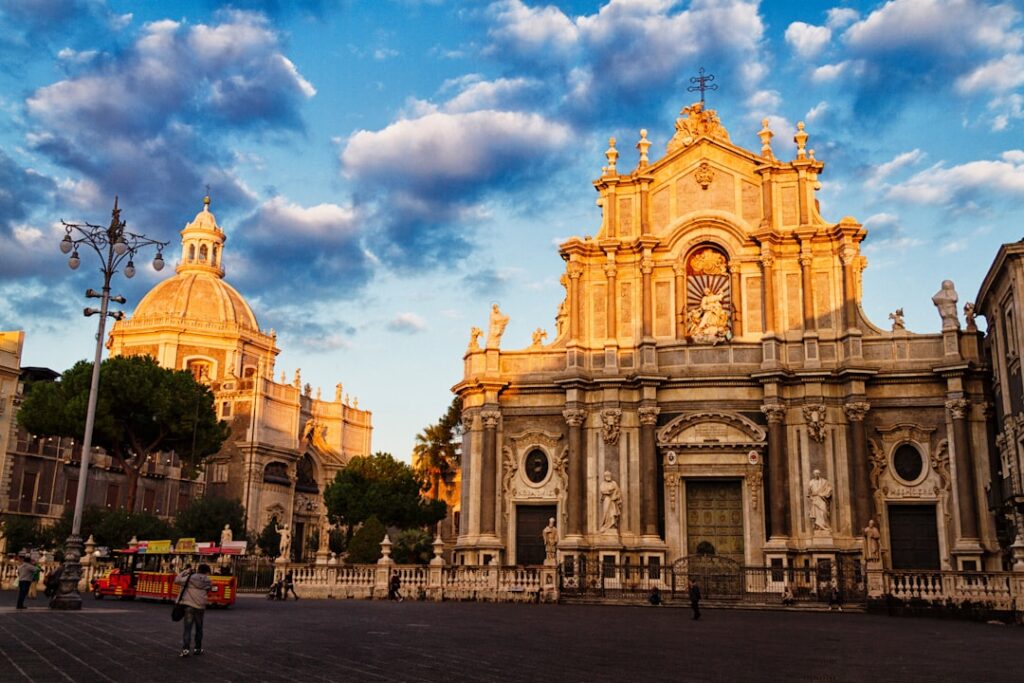
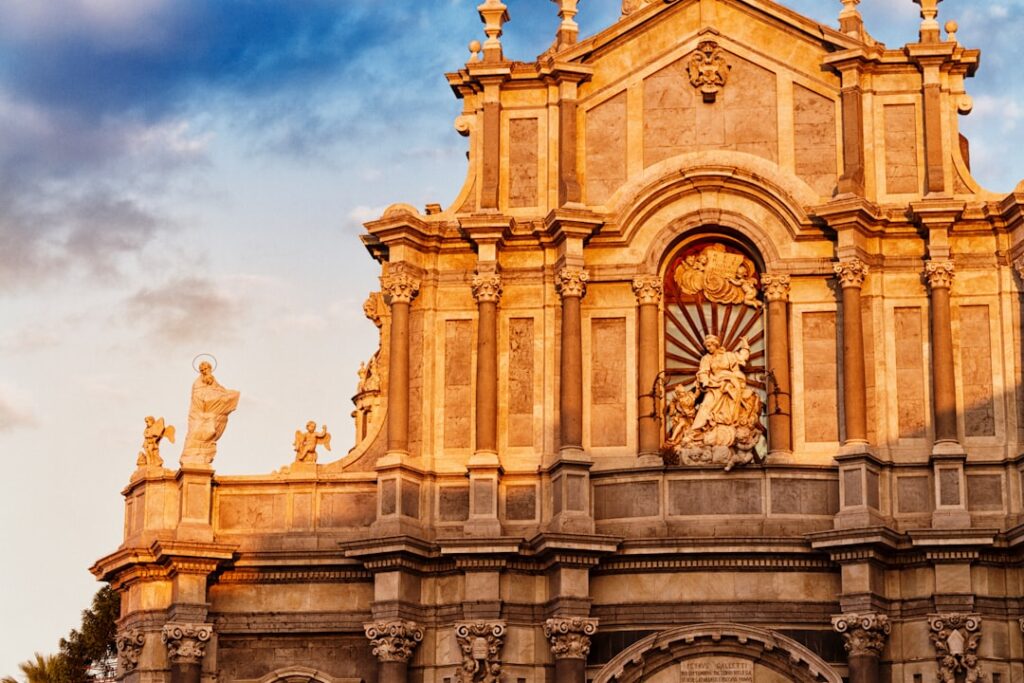
Cattedrale di Sant’Agata (Cathedral of Saint Agatha)
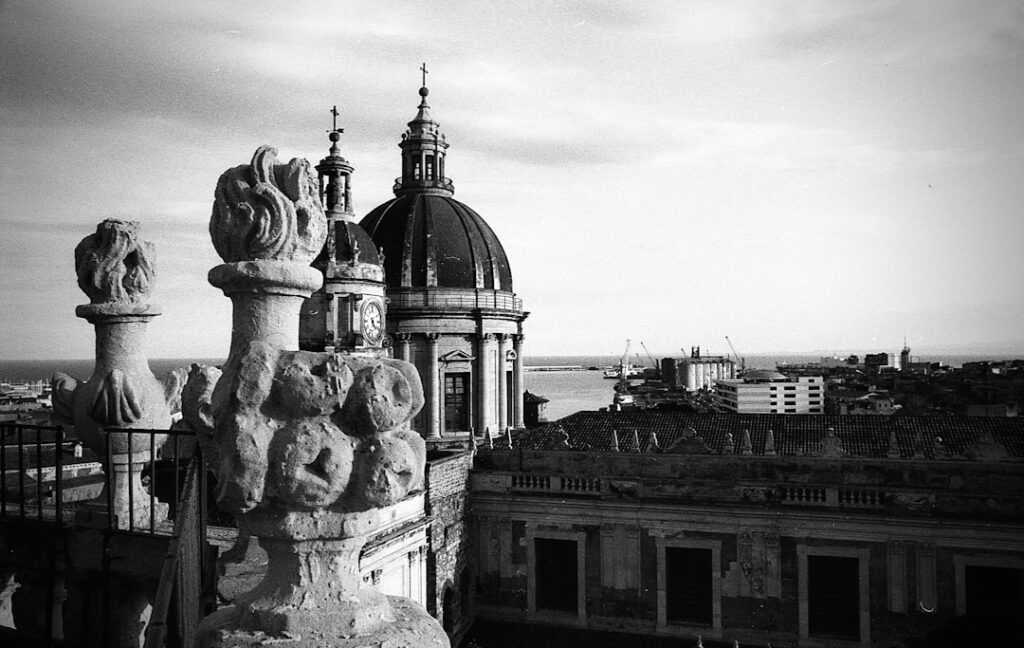
Address: Piazza Duomo, 12, 95131 Catania CT. Hours: generally open 7:00–13:00 and 16:00–19:00 (closed during services). Price: basic entry is free; access to the treasury and the diocesan museum around €4.00–€6.00. Description: the cathedral houses relics of Saint Agatha and a crypt, plus a treasury of baroque goldsmithing. Side chapels offer sculpted details and a contemplative atmosphere.
-
Castello Ursino (Museo Civico)
Address: Piazza Federico di Svevia, 1, 95121 Catania CT. Hours: 9:00–19:00 (closed Mondays depending on season). Price: Museo Civico ticket around €6.00–€8.00. Description: built in the 13th century by Frederick II, it now houses archaeological collections and medieval halls. At the back, look for a small door leading to a stretch of solidified lava — perfect for sensing Catania’s geology.
-
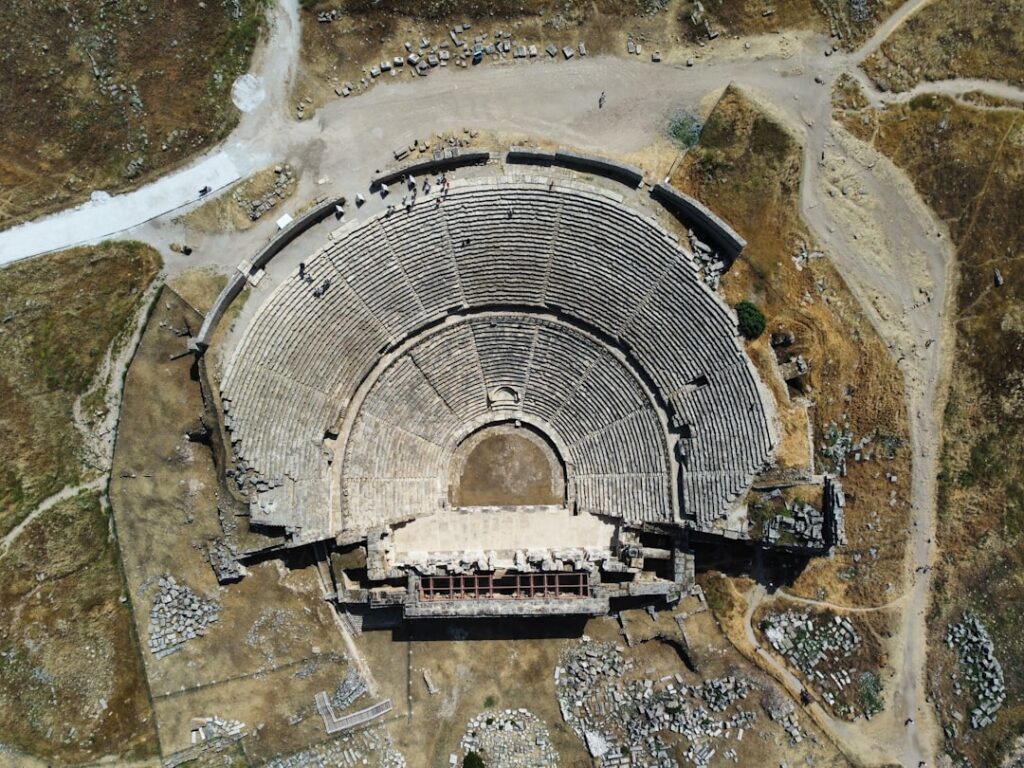
Anfiteatro Romano (Roman Amphitheatre)
Address: Piazza Stesicoro, 30, 95121 Catania CT. Hours: 9:00–18:00 (variable). Price: often included in combined museum tickets, approx. €4.00–€6.00. Description: a Roman remnant partially visible from the square, with hidden angles that grant access to small stands and lava stone walls.
-
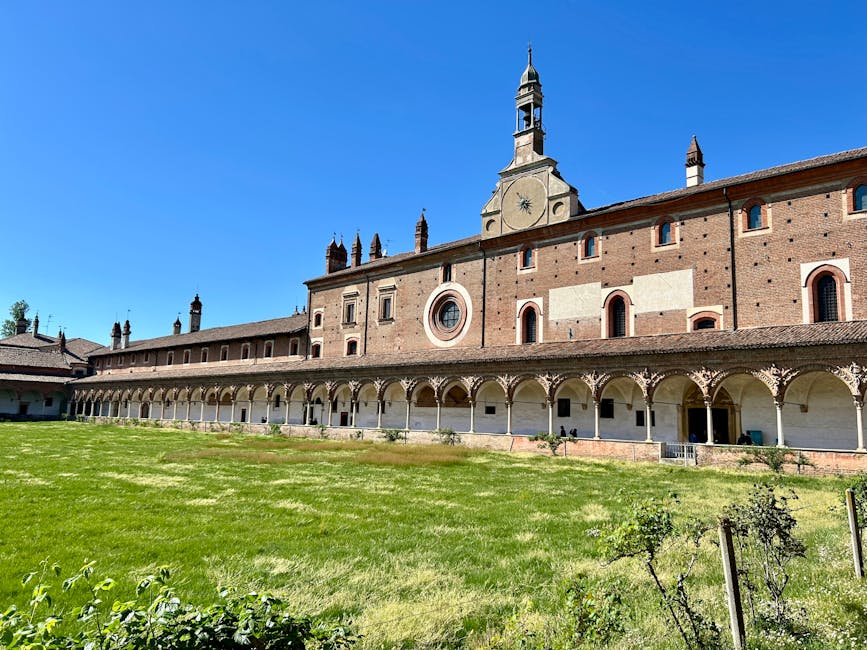
Monastero dei Benedettini (San Nicolò l’Arena)
Address: Piazza Dante Alighieri, 32, 95124 Catania CT. Hours: guided tours 9:00–17:00 (check university/event schedule). Price: €6.00–€10.00 depending on the guided tour. Description: a vast monastic complex offering cloisters, baroque halls and panoramic Etna views from its terraces. It’s an ideal place to understand the city’s historical layers.
-
Teatro Massimo Bellini
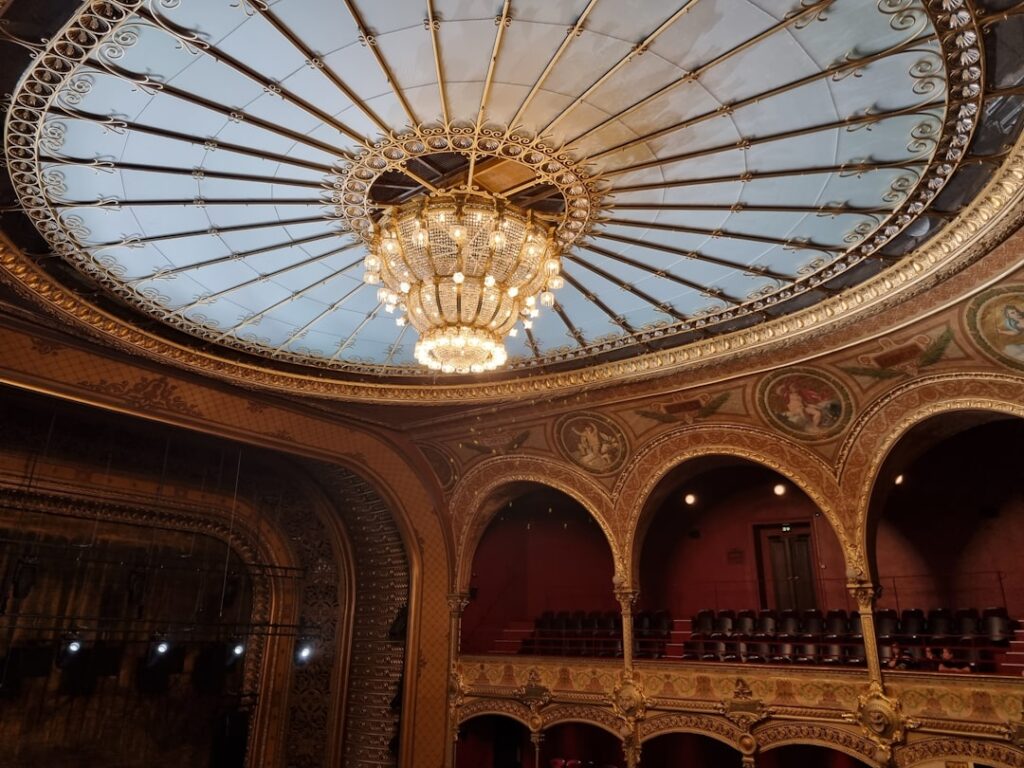
Address: Via Vittorio Emanuele II, 65, 95131 Catania CT. Hours: guided tours 10:00–18:00; evening performances. Price: guided tours €5.00–€10.00; performance tickets vary (€20.00–€80.00). Description: an opulent interior with a richly decorated foyer; behind the theatre, small alleys where artists still gather.
Practical tips for these sites: buy combined tickets if available (often a good deal for Castello Ursino + Anfiteatro). Check official websites or the Catania tourist office (Piazza Università, 95131) for seasonal hours. Carry a €1–2 coin for lockers or cloakrooms if needed and allow 1–1.5 hours for each major visit.
Nocturnal atmospheres, urban legends and mysteries at dusk
When the sun sets behind Etna, Catania transforms: the main avenues light up, but it’s the discreet alleys that offer the biggest surprises. Old streetlamps cast a warm yellow glow on the cobbles, small churches spread a hush occasionally broken by night prayers or street chants. Several local legends are worth mentioning: Saint Agatha’s presence as protector of the city, tales of cellars flooded by lava turned into natural caves, and stories of bandits and smugglers who used these passages to escape authorities.
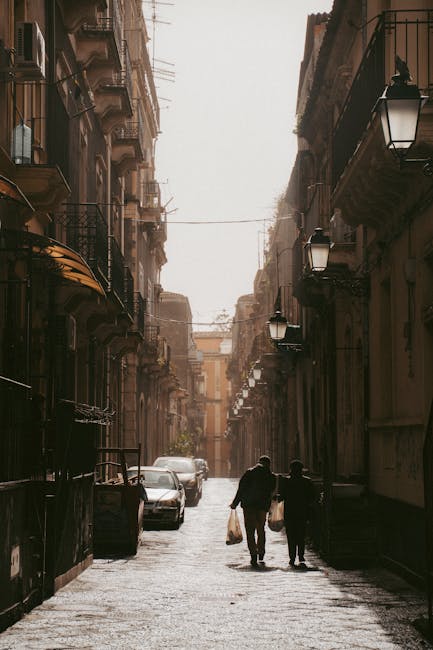
For a safe and memorable night walk, start at Piazza del Duomo (Piazza Duomo, 95131 Catania CT) and take the alleys east toward Via Santa Filomena. Areas around Via Etnea and Piazza Università stay lively and secure late into the evening. Avoid isolated spots after midnight if you’re alone; favor well-lit, busy streets. Wine bars and small osterie near Via Crociferi often close around 1:00–2:00. Night route idea: an aperitivo at Trattoria da Antonio (address: Via San Giuliano 6, 95131 Catania CT — check hours: typically 12:00–15:00 and 19:00–23:00), then a stroll to the Lungomare di Ognina to listen to the sea.

Nighttime experiences not to miss:
– Catch an impromptu concert or serenade in a small piazza. Street musicians often play after 21:00.
– Savor a pistachio granita at gelateria Alla Cattedrale (Piazza Duomo area) and enjoy it on the cathedral steps.
– Join the vigils during the Feast of Saint Agatha (February 3–5): processions, offerings and chants take over the whole city.
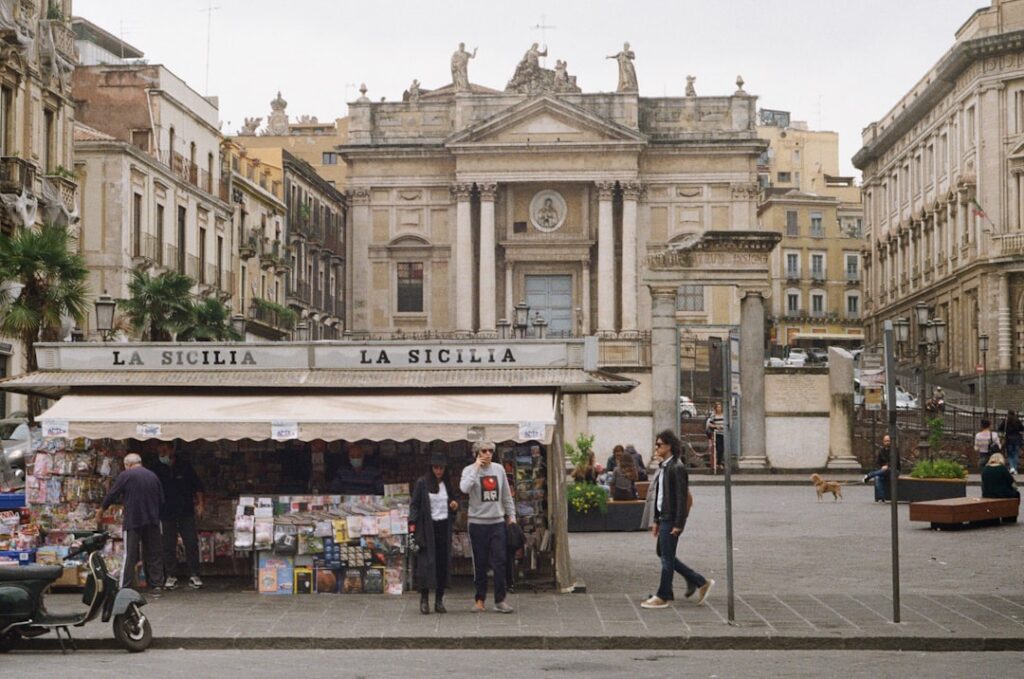
Safety tips: keep valuables discreet, avoid holding your phone in very dark areas, and know that official taxis display a logo and the fare. For a deeper experience, join a guided night tour (indicative price €12.00–€25.00) — guides share legends and architecture while keeping the route safe.
Practical tips and recommended routes to explore the alleys in depth
Diving deep into Catania’s alleys requires preparation and flexibility. Here are practical tips — logistics, gear, local etiquette — and three routes tailored to different types of travelers: the photographer, the history buff, and the food-loving stroller.
Recommended gear:
– Comfortable shoes: uneven cobbles and steps (trainers or lightweight walking shoes).
– Small flashlight: useful for poorly lit passages and interior stairways.
– Offline map or GPS app (Google Maps, Maps.me): some alleys have spotty mobile signal.
– A small amount of cash (€10–30): some cafés or stalls take cards poorly.
– Respect and quiet: for private courtyards and religious spaces.
Recommended routes:
– Photographer’s route (2–3 hours): Start on Via Etnea (from Piazza Università), cross Via Crociferi at sunrise, continue to Vico Santa Filomena, then climb to the Monastero dei Benedettini terrace for an Etna view. Photo stops: façade of Teatro Massimo Bellini, cloister of the Monastero (book a visit if possible).
– Historian’s route (3–4 hours): Begin at Castello Ursino (Piazza Federico di Svevia, 1), move to the Anfiteatro Romano (Piazza Stesicoro), visit Cattedrale di Sant’Agata and finish with a guided tour of Monastero dei Benedettini. Bring notes on the Roman, medieval and baroque layers visible on the façades.
– Foodie/stroller route (2–3 hours): Typical breakfast at Pasticceria Savia (Via Etnea 312, hours 7:00–20:00), wander through the Pescheria market (early morning 6:00–13:00, Piazza Pardo/Piazza del Duomo area), light lunch at Trattoria da Antonio, and a relaxed finish in Villa Bellini gardens (Piazzale Vincenzo Bellini, 95131; gardens open 7:00–20:00; free entry).

Local etiquette: greet shopkeepers and small trattoria staff with a “buongiorno” or “buona sera” when entering; ask permission before photographing people; respect service times in churches (avoid entering during Mass unless necessary). Finally, check with the tourist office (Piazza Università) for temporary exhibitions and themed guided tours that reveal alleys often closed to the public.
Conclusion: Why these alleys are the beating heart of Catania
Catania’s secret alleys are much more than shortcuts between monuments: they’re the living fabric of a city shaped by lava, sea and people. Every narrow passage, hidden stair and small square carries a story — sometimes grim, sometimes joyful — woven into the city’s grand narratives. Walking these forgotten lanes you sense the layering of eras: Roman stones built into baroque façades, medieval inscriptions hidden under 18th-century plaster, and contemporary touches like murals or artisan shops.
Beyond architectural discovery, the true richness of these alleys is human. Shopkeepers running family businesses for generations, craftsmen mending things by hand, neighbors gathering on stoops — all contribute to a conviviality that reveals itself to those who take the time to wander without purpose. At night, the same weave becomes more mysterious: muted sounds, silhouettes in backlight, rituals and vigils that recount still-living traditions. It’s an intimate Catania — sometimes unpredictable, always authentic.
To visit these alleys you must accept two things: first, slowness — walking slowly lets you notice a carved detail, a portal, a little inscription. Second, humility — some courtyards remain private and must be respected. In return, you’ll be rewarded with unexpected finds: a miniature chapel, a hidden fresco, an Etna view from an anonymous terrace, or simply a café where time stands still. Take this guide as a starting point, but mostly allow yourself to veer off the route, ask locals questions and keep your senses open: that’s how Catania’s alleys reveal their best secrets.